Understanding Bitcoin Mining: The Basics
Bitcoin mining is a foundational component of the cryptocurrency economy, leveraging innovative blockchain technology to validate transactions and secure the network. As one of the key mechanics that underpins Bitcoin, the mining process not only facilitates the generation and distribution of new bitcoins but also ensures the integrity and security of the decentralized network. By participating in mining, individuals and organizations contribute to a robust ecosystem that relies on complex mathematical problems, cryptographic principles, and decentralized consensus mechanisms. When exploring options, bitcoin mining provides an engaging way to understand both the technical workings and economic implications of this exciting field.
What is Bitcoin Mining?
Bitcoin mining is the process by which new bitcoins are created and transactions are verified and added to the public ledger, known as the blockchain. It involves solving complex cryptographic puzzles that require substantial computational power. Miners compete to solve these puzzles, and the first to find the solution gets to add the next block to the blockchain and is rewarded with newly minted bitcoins as well as transaction fees from the transactions included in that block.
How Bitcoin Mining Works
The Bitcoin mining process primarily relies on the Proof of Work (PoW) consensus mechanism. This involves miners using specialized hardware to perform hash calculations, with the target being to find a hash output that meets specific criteria set by the Bitcoin network. Each block of transactions contains a nonce (number used only once), and miners repeatedly alter this nonce and rehash the block until they discover a hash that is below a predetermined difficulty level. This process requires significant energy and computational power, leading to the requirement for efficient mining rigs and cooling solutions.
Proof of Work vs. Proof of Stake
While Bitcoin utilizes Proof of Work to secure its network, other cryptocurrencies may use Proof of Stake (PoS) as an alternative consensus mechanism. In PoS, validators (instead of miners) are chosen to create new blocks based on the number of coins they hold and are willing to “stake” as collateral, thus reducing the energy consumption associated with mining. Both systems aim to achieve distributed consensus, but they employ different methodologies for validating transactions and achieving network security.
Getting Started with Bitcoin Mining
For those looking to enter the world of Bitcoin mining, understanding the foundational components and equipment required is essential. The right hardware and software, along with a strategic approach to mining pools, can significantly impact success rates and profitability.
Required Hardware for Mining
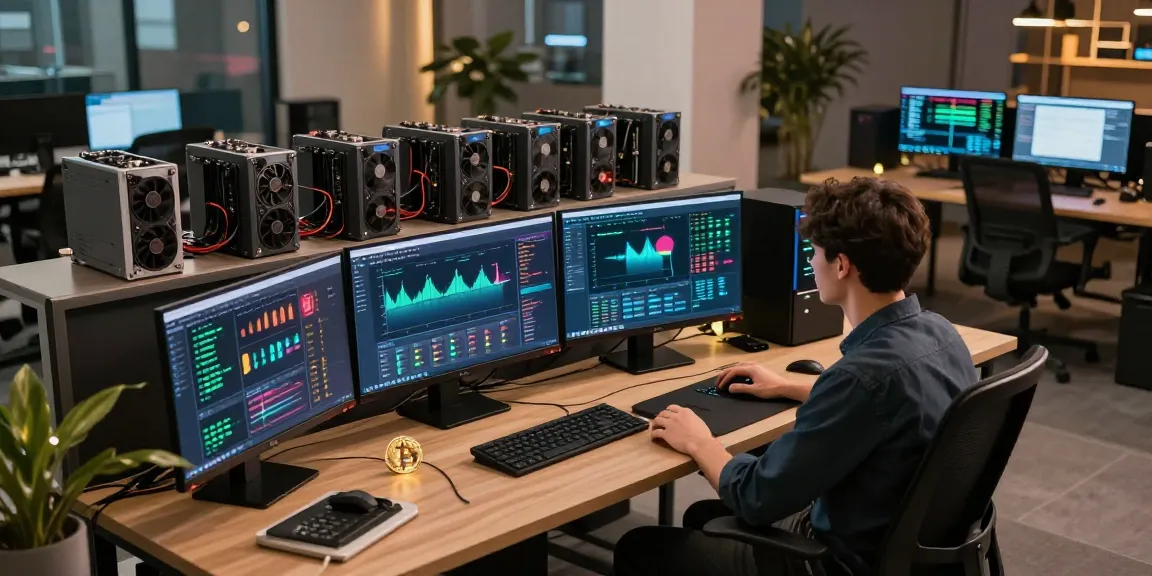
Mining Bitcoin efficiently requires specialized hardware known as Application-Specific Integrated Circuits (ASICs). These devices are designed specifically for Bitcoin mining, offering optimized performance compared to conventional GPUs. As the mining difficulty increases over time, such hardware becomes necessary to maintain profitability. Key considerations include hash rate, power consumption, and initial investment costs.
Choosing a Mining Pool
Mining solo can be a daunting and unprofitable endeavor due to the massive competition on the Bitcoin network. Joining a mining pool allows miners to combine their computational power to increase the odds of successfully mining a block. In a mining pool, rewards are distributed among participants based on their contributed hash power, making it a more stable and predictable way to earn bitcoin over time.
Software Setup and Configuration
Once hardware and a mining pool are secured, miners must install software to connect their devices to the Bitcoin network. Software typically includes a mining client and optionally a wallet to store earned bitcoins. Configuring this software correctly is crucial for optimizing performance and ensuring secure connections to mining pools and the network.
Profitability and Costs of Bitcoin Mining
The profitability of Bitcoin mining depends on several factors, including hardware efficiency, electricity costs, and the current market price of Bitcoin. Understanding these variables is essential for both new and seasoned miners aiming to maintain sustainable operations in a fluctuating market.
Analyzing Mining Profitability
Several online calculators can assist miners in assessing the profitability of their operations by inputting variables such as hash rate, energy costs, and network difficulty. It is crucial to regularly analyze these figures, as market conditions and mining difficulty can change rapidly, impacting the return on investment.
Energy Consumption and Efficiency
Energy consumption is one of the most significant expenses associated with Bitcoin mining. Miners often seek locations with lower electricity costs and favorable climates to reduce cooling expenses. In recent years, there has been growing concern over the environmental impact of mining operations, pushing many miners to explore renewable energy sources or more efficient equipment to lessen their carbon footprint.
Long-Term Viability of Mining Operations
The long-term viability of mining operations hinges on the ability to adapt to an evolving landscape. As Bitcoin’s supply diminishes through halving events and competition heightens, miners must continually evaluate their strategies, reinvest in newer technologies, and navigate regulatory changes to remain operational and profitable.
Bitcoin Mining Security Best Practices
Security in the realm of Bitcoin mining is paramount, encompassing not just the safeguarding of mining rigs but also the protection of generated bitcoins and operational integrity. Following best practices can help mitigate risks associated with mining activities.
Protecting Your Wallet and Keys
Securing your bitcoins involves choosing the right wallet and implementing best practices for private key management. Hardware wallets (such as Ledger and Trezor) offer greater security by storing keys offline, while users of hot wallets must ensure they employ strong security measures, including multi-signature options and two-factor authentication (2FA).
Avoiding Common Mining Scams
The cryptocurrency space is fraught with scams targeting miners, including fraudulent mining pools and deceptive cloud mining offers. It is vital to conduct thorough research before committing to any mining opportunity and look for established, reputable platforms within the community.
Regulatory Compliance and Safety Protocols
As regulatory scrutiny increases, especially in jurisdictions like the United States and the European Union, miners must remain compliant with local laws and regulations. This includes adhering to Anti-Money Laundering (AML) and Know Your Customer (KYC) requirements, as well as tax implications associated with mined earnings.
Future Trends in Bitcoin Mining
The landscape of Bitcoin mining is continually evolving, driven by advancements in technology and a growing awareness of sustainability within the industry. Future trends will likely shape the operational approach of miners and influence overall market dynamics.
Environmental Impact and Sustainable Mining
In light of increasing environmental concerns, more miners are exploring sustainable practices, such as utilizing renewable energy sources or improving energy efficiency in mining operations. This shift not only helps meet regulatory standards but also improves public perceptions of the industry.
Technological Advances in Mining Hardware
As technology progresses, innovations in mining equipment are expected to enhance performance and reduce energy consumption. The introduction of more efficient ASIC miners and advancements in cooling technologies are just a few areas where improvements can lead to increased profitability for miners.
Predictions for Bitcoin Mining in 2026
By 2026, it is anticipated that Bitcoin mining will face even greater competition and regulatory scrutiny. The ongoing evolution of blockchain technology may give rise to new consensus algorithms or hybrid models, potentially affecting the role of traditional mining. Understanding these trends will be crucial for miners aiming to maintain a competitive edge.
What is the best hardware for Bitcoin mining?
The best hardware for Bitcoin mining is typically ASIC miners, like the Antminer S19 Pro, due to their specialized design for efficient Bitcoin mining. Choosing the right hardware depends on factors such as price, power consumption, and hash rate.
Is Bitcoin mining still profitable in 2026?
Profitability in mining activities can be influenced by various factors including Bitcoin’s market price, mining difficulty, energy costs, and technological advancements. With the right strategy and efficient equipment, miners can still find opportunities for profit even in challenging market conditions.
How to secure my Bitcoin miner?
Securing your Bitcoin mining operation involves implementing rigorous hardware and software security measures, such as using firewalls, consistently updating software, and employing two-factor authentication on accounts. Regular maintenance and updates to your mining setups help prevent vulnerabilities.
What is the impact of energy costs on mining?
Energy costs significantly impact mining profitability, as the majority of operational expenses are tied to electricity consumption. Exploring areas with low energy prices or utilizing green energy sources can enhance the overall sustainability and viability of mining operations.
Can Bitcoin mining be done from home?
While it is technically possible to mine Bitcoin from home, it is often impractical due to the need for specialized equipment, substantial energy costs, and the competitive nature of the network. For most individuals, joining mining pools or investing in cryptocurrencies directly may offer a better return.